
Waking up feeling stiff is common, especially after spending several hours in one position. A few gentle stretches can help you transition from rest to movement without rushing your body into intense exercise.
The routine below is designed for beginners. It uses slow, comfortable movements that can be done beside your bed, on a mat, or in a sturdy chair. You do not need special equipment, and the full sequence can take as little as 5 to 10 minutes.
How to Stretch Safely in the Morning
Morning muscles and joints may feel less ready for movement than they do later in the day. Begin slowly and focus on relaxed, controlled motions.
Keep these simple guidelines in mind:
– Move gradually rather than bouncing into a stretch.
– Breathe steadily throughout each movement.
– Stretch only to a mild pulling sensation, never sharp pain.
– Keep your movements smooth and relaxed.
– Stop if you feel dizzy, unusually weak, or uncomfortable.
– Use a wall, chair, or bed for support when needed.
If you have an injury, ongoing discomfort, or a condition that affects movement, consider asking a qualified health professional which activities are appropriate for you.
Five-Minute Morning Stretching Routine
This routine moves from gentle upper-body motions to larger stretches for the back, hips, and legs. Hold each stretch for about 15 to 30 seconds unless noted otherwise. For movements that involve both sides, repeat on the left and right.
1. Seated Neck and Shoulder Release
Sit on the edge of your bed or in a stable chair with both feet on the floor. Keep your back comfortable and your shoulders relaxed.
Start by slowly turning your head to look over your right shoulder. Return to the center, then turn to the left. Next, bring your right ear slightly toward your right shoulder without lifting the shoulder. Repeat on the other side.
Finish with five slow shoulder rolls in each direction.
This gentle sequence can help loosen areas that often feel tense after sleeping or spending time at a desk. Avoid pulling on your head or forcing your neck into a deep angle.
2. Overhead Reach and Side Stretch
Stand with your feet about hip-width apart, or remain seated if that feels more comfortable. Raise both arms toward the ceiling as far as you can without straining. Keep your shoulders away from your ears.
Take a slow breath in. As you breathe out, lean slightly to the right while keeping both feet grounded. Return to the center and repeat on the left.
Complete two or three gentle repetitions on each side. Think of lengthening through your ribs rather than bending as far as possible.
3. Cat Cow on a Bed or Mat
Move onto your hands and knees on a firm, comfortable surface. Place your hands under your shoulders and your knees under your hips. If getting onto the floor is difficult, place your hands on a sturdy table or countertop and perform the movement while standing.
As you breathe in, gently lift your chest and allow your back to soften. As you breathe out, round your back slightly and let your head follow the movement. Continue for six to eight slow repetitions.
This exercise encourages comfortable movement through the spine. Keep the range of motion small at first, especially if you feel stiff.
4. Child’s Pose Variation
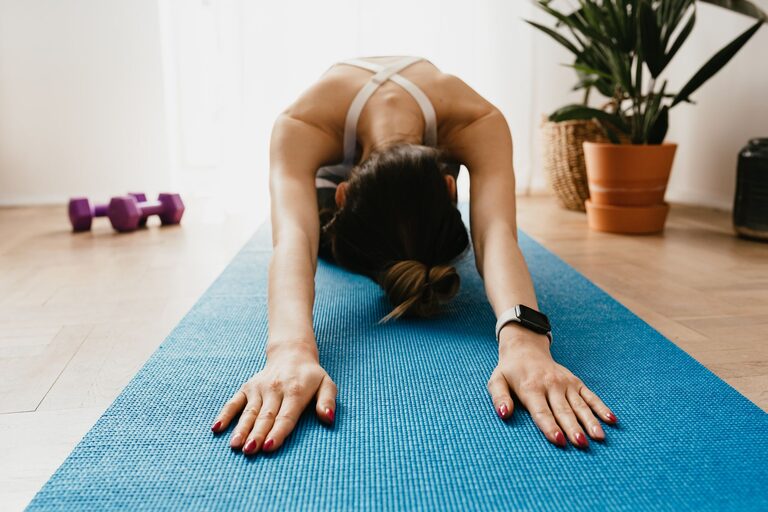
From the hands-and-knees position, slowly move your hips back toward your heels. Extend your arms forward, or place your forearms on the bed or mat if that is more comfortable. You can also keep your hips higher and simply reach your hands forward.
Hold the position for 15 to 30 seconds while breathing easily. To make it gentler, place a pillow beneath your chest or sit back only partway.
This stretch can feel relaxing for the back, hips, and shoulders. It should never feel like your knees, ankles, or lower back are being forced into position.
5. Standing Calf Stretch
Stand facing a wall and place both hands on it for support. Step your right foot back, keeping the heel down and the toes pointing forward. Bend your front knee slightly while keeping the back leg comfortable.
Hold for 15 to 30 seconds, then switch sides. To change the stretch, gently bend the back knee while keeping the heel grounded.
The calves can feel tight after a night of limited movement. Keep your back heel aligned behind your toes rather than turning the foot outward.
6. Gentle Hip Flexor Stretch
Stand in a split stance with your right foot forward and your left foot a comfortable step behind. Hold a wall or chair if needed. Bend the front knee slightly and keep your back leg relaxed.
Tuck your hips gently beneath you, as if bringing the front of your pelvis slightly upward. You should feel a mild stretch near the front of the left hip. Hold for 15 to 20 seconds, then change sides.
Avoid leaning far forward or arching your lower back. A smaller movement is often more comfortable and easier to control.
7. Seated Hamstring Stretch
Sit near the front of a chair with your right leg extended and your heel resting on the floor. Keep your back long and bend your left knee. Hinge forward slightly from your hips until you feel a gentle stretch along the back of your right leg.
Hold for 15 to 30 seconds, then repeat on the other side. Keep your chest open and avoid rounding deeply through your back.
You do not need to touch your toes. The goal is a comfortable stretch, not maximum range.
A Simple Seven-Day Approach
Consistency matters more than performing a long routine once in a while. Try this gradual schedule:
– Days one and two: Complete the neck, shoulder, overhead reach, and calf stretches.
– Days three and four: Add cat cow and the seated hamstring stretch.
– Days five and six: Include the hip flexor stretch and child’s pose variation.
– Day seven: Complete the full routine at an easy pace.
After the first week, you can repeat the full sequence most mornings or choose three or four stretches based on how you feel.
Tips for Making Morning Stretching a Habit
A routine is easier to maintain when it fits naturally into your morning. Place a mat near your bed, keep a chair available for support, or stretch while waiting for your coffee to brew.
You can also connect stretching with another daily activity, such as opening the curtains or listening to a short podcast. Keep your expectations realistic. Five mindful minutes can be more useful than planning a long routine that you rarely complete.
Most importantly, treat morning stretching as a gradual wake-up for your body. Move with patience, breathe naturally, and focus on comfortable progress rather than forcing flexibility.